

ATS & CV Optimization
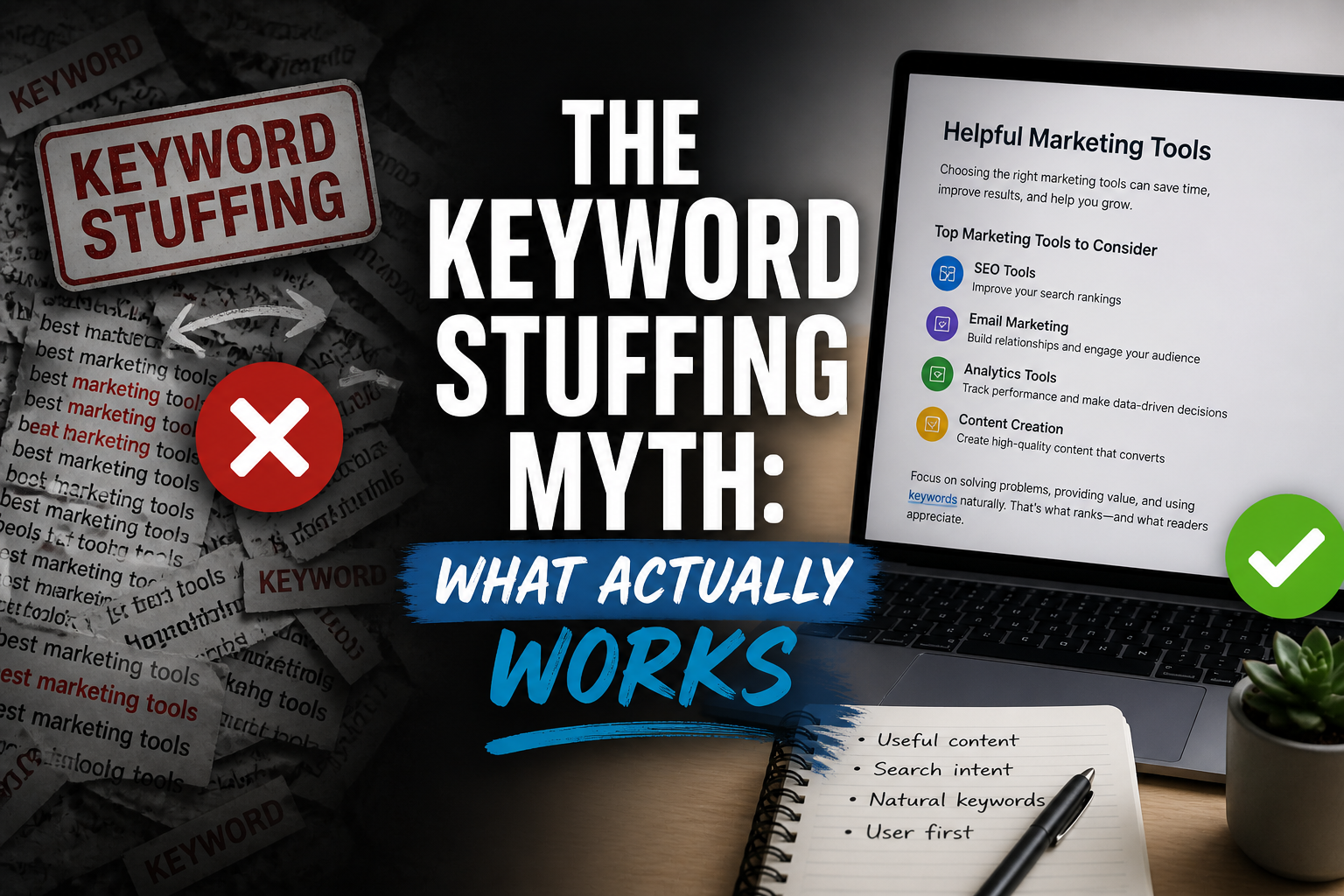
The Keyword Stuffing Myth: What Actually Works in Your CV
You have heard that loading your CV with keywords will fool the ATS. You have also heard that recruiters hate it. Both sides are partly right and mostly wrong. Here is a clear-eyed look at what keyword strategy actually does to your application results.
Keyword stuffing, adding long lists of buzzwords in white text or cramming skills into every bullet point, does not work on modern ATS systems and actively puts off recruiters who do read your CV. The right approach is contextual keyword integration: using the exact terms from the job description naturally within your work history and skills sections, with evidence to back them up. Matching 6 to 10 specific keywords from a job posting with real context beats listing 40 generic ones every time. ApplyIn5 analyses each job posting and builds keyword-matched CVs automatically, so you get the balance right without spending an hour on it manually.
What keyword stuffing actually is
Keyword stuffing in CVs comes in several forms, and some are more obvious than others. The most extreme version is copying the entire job description into a white-font text block at the bottom of your CV so ATS systems read it but humans cannot see it. This trick worked on first-generation ATS platforms from the early 2000s. It does not work now, and it can get your application flagged automatically.
The more common version is less obvious but just as counterproductive: cramming skills lists with every technology, methodology, and tool you have ever touched, regardless of relevance. A software developer applying for a backend Python role who lists “Python, JavaScript, React, Angular, Vue, TypeScript, Java, Kotlin, Swift, Objective-C, C++, Rust, Go, PHP, Ruby, Rails” in a skills section is stuffing. A skills section that is longer than your work history is a red flag, not a selling point.
A third form is repeating a keyword in every single bullet point, even where it adds no information. “Used Python to build a data pipeline. Optimised Python performance by 30%. Wrote Python tests for the pipeline. Maintained Python documentation.” The word Python appears four times in four bullets but tells the reader almost nothing about what you actually accomplished.
Repeating your target job title throughout your CV as though the repetition will help you rank higher is an outdated tactic. Modern ATS systems use semantic matching, not simple keyword frequency counting. Saying “Project Manager” twelve times does not make you appear more qualified than saying it twice with strong evidence.
Why it fails on modern ATS systems
ATS platforms have evolved significantly over the past decade. The platforms used by large UAE and Indian employers, including the engines behind Naukri and Bayt’s recruiter search tools, do not simply count keyword occurrences and rank candidates by frequency. They use more sophisticated matching that considers context, proximity to other relevant terms, and signal-to-noise ratio.
The semantic approach means an ATS can recognise that “managing a team of 12 engineers” is relevant evidence for a “People Management” keyword, even if those exact words never appear together. Conversely, a CV that lists “Leadership, Team Management, People Development, Stakeholder Management, Cross-functional Collaboration” with no supporting context in the work history provides weak signal. The system can see the keywords. It cannot find the evidence.
There is also the question of how recruiters configure their ATS searches. A recruiter searching for a marketing manager on Naukri typically searches for two to five specific terms: the job title, a specific skill like “performance marketing” or “brand strategy,” and sometimes a tool name like “Google Analytics.” The candidates who appear at the top of results are not those with the most keywords. They are those whose CVs demonstrate clear relevance to the specific terms the recruiter searched.
Stop thinking about keywords as things to collect and think about them as labels for real experiences you already have. The question is not “how do I get more keywords in?” but “which of my actual experiences are described using the words this employer uses?”
What happens when a recruiter does open your CV
Getting past the ATS is step one. Step two is surviving the first six seconds of human review. Keyword stuffing actively works against you here. A recruiter who opens a CV and sees a wall of skills, a generic summary loaded with buzzwords, and bullet points that repeat the same term over and over will close the file quickly. Not because they are being harsh. Because they have 80 more CVs to read and yours gave them no reason to slow down.
Recruiters in the UAE and India are experienced at spotting inflated CVs. Many will specifically search for evidence behind the claims. When your skills list says “Strategic Planning,” they look for a role where you actually planned something at scale. When it says “P&L Management,” they look for a revenue figure in your work history. Skills listed without supporting evidence are decorative. They do not build the recruiter’s confidence.
The recruiter scanning pattern is roughly this: name and contact, current or most recent role, company and duration, two to three bullet points from that role, education, then a quick scan of skills. Everything you need to communicate needs to be findable in that pattern. A long skills list padded with every technology you have ever heard of slows that scan and dilutes the signal.
What actually works: contextual keyword matching
Contextual keyword matching means using the specific language from a job posting within the context of your real experience. It has three components: finding the right keywords, placing them where they carry evidence, and avoiding duplication without substance.
The goal is not to mention every keyword from the job description. It is to make it obvious, quickly, that your experience maps to what the employer needs. That means choosing the six to ten keywords that represent the core requirements of the role and ensuring each one appears at least once in your work history bullets, supported by a concrete example or outcome.
This is different from stuffing because every keyword mention carries weight. You are not padding. You are translating your experience into the employer’s language. A supply chain professional applying for a “demand planning” role should not write “demand planning, demand forecasting, supply planning, inventory management, materials planning, S&OP” in a skills list. They should write one bullet point in their work history that says: “Led demand planning process for a 400 SKU portfolio, reducing forecast error by 18% over two quarters.” That single bullet hits demand planning, forecast, and supply chain context all at once, with evidence.
One keyword with a number behind it is worth more than ten keywords in a list. Every skill you claim should be verifiable from your work history. If it is not, remove it from the skills section and find a way to demonstrate it in a bullet point, or leave it out entirely.
How to find the right keywords for any job posting
Most job postings tell you exactly which keywords matter. You just need to know where to look and what to prioritise.
Step 1: Read the requirements section word for word
The requirements or qualifications section of a job posting is where employers list what they are genuinely looking for. The responsibilities section describes the role. Both matter, but the requirements section usually contains the terms a recruiter will search for. Copy them out and group them by type: hard skills, tools, soft skills, and domain knowledge.
Step 2: Identify what appears more than once
Terms that appear in both the job title, the responsibilities section, and the requirements section are the core keywords. If “financial modelling” appears in the title, in one responsibility, and in the requirements list, it is essential. If “proficiency in Excel” appears once in requirements, it matters but is secondary.
Step 3: Match exact phrasing where possible
ATS systems often match on exact strings. If the posting says “stakeholder management,” using “stakeholder engagement” instead may not score the same match. Use the employer’s exact phrasing wherever it accurately reflects your experience. Do not rephrase unless the rephrasing is more accurate.
Step 4: Check the company’s LinkedIn page and other job postings
Companies develop internal vocabulary. If a company consistently uses “customer success” rather than “account management” across their job postings, that is the term you should use. Two minutes of research can align your language with the company’s dialect.
ApplyIn5 analyses each job posting you apply to and identifies the specific keywords and phrases that matter for that role. It then tailors your CV to include those terms in context, drawing from your stored work history. The process that takes most people 30 to 45 minutes of manual editing happens in under 2 minutes per application.
Stuffed vs contextual: side-by-side examples
The difference is clearest when you see the same experience written two ways. Both examples below are for a marketing manager role in Dubai. The job description mentioned: performance marketing, Google Ads, Meta Ads, ROI, customer acquisition, and budget management.
| Section | Stuffed version | Contextual version |
|---|---|---|
| Skills | Performance marketing, Google Ads, Meta Ads, ROI, customer acquisition, budget management, digital marketing, social media, content, SEO, SEM, email, CRM, analytics, reporting | Performance marketing (Google Ads, Meta Ads), budget management up to AED 500K |
| Work history bullet | Managed performance marketing campaigns using Google Ads and Meta Ads to drive ROI and improve customer acquisition through budget management | Managed AED 480K annual Google Ads and Meta Ads budget, achieving 3.2x ROI and reducing customer acquisition cost by 22% in 12 months |
| ATS score | Moderate (keywords present, weak context) | High (keywords present with evidence context) |
| Recruiter reaction | Reads as generic. Nothing memorable. | Specific budget size. Specific ROI. Credible. |
The stuffed version hits more keywords by word count. The contextual version hits the same core keywords and adds the evidence that makes a recruiter believe them. One of these candidates gets a call. The other does not.
For more on how application volume and keyword strategy interact with your callback rate, see the job application math breakdown.
Frequently asked questions
- How many keywords should my CV have?
- There is no ideal number, but 6 to 10 specific, relevant keywords per application, each appearing in a context that demonstrates competence, is a solid target. Chasing a higher count by adding more generic terms reduces quality and does not improve ATS ranking in any meaningful way.
- Should I change my CV for every job I apply to?
- Yes. A single CV sent to 50 different jobs in 50 different roles is almost always outperformed by a tailored CV for each. The tailoring does not need to be dramatic: adjust your professional summary, ensure the 6 to 10 core keywords from each posting appear in your work history, and check that your skills list reflects the specific role. This takes 20 to 40 minutes manually, or under 2 minutes with ApplyIn5.
- Do ATS systems actually penalise keyword stuffing?
- Some do, particularly newer platforms that include a relevance quality score. But even when there is no active penalty, stuffing fails because it dilutes the signal-to-noise ratio. A CV with 40 generic skills listed and 5 bullet points of work experience gives the ATS very little to match on. A CV with 10 targeted skills and strong work history bullets gives it much more usable data.
- What if I am missing a keyword from my actual experience?
- Do not claim skills you do not have. If a required skill is genuinely missing, acknowledge it honestly in your cover letter and lead with what you do have that is transferable. Recruiters can usually spot inflated skills during interviews. Getting caught misrepresenting your experience is far more damaging than a skills gap.
- Does the keyword strategy differ between Naukri and LinkedIn?
- Naukri’s search is heavily weighted toward exact keyword matches in the skills and current designation fields. LinkedIn uses a broader semantic search that also factors in connections and profile completeness. For Naukri, precision in the skills section matters more. For LinkedIn, your headline and the first 200 characters of your About section also carry significant weight.
Stop guessing which keywords matter. Let the job posting tell you.
ApplyIn5 reads each job posting, identifies the keywords that will move your application forward, and builds a tailored CV automatically. Every application gets the right language for that specific role.
Apply in 5 minutes and get hired today →